
In this ultimate Perler bead ironing guide, we cover everything you need to know: heat settings, ironing paper, timing, how to get no‑hole finishes, how to prevent warping, how to iron both sides, and pro tricks for professional results. Whether you're making keychains, coasters, wall art, or 3D projects, this guide will help you iron like a pro.

Why Proper Ironing Matters for Perler Beads
Ironing melts the plastic beads just enough to fuse them together into a strong, solid piece. Done right, your project will be flat, durable, and clean. Done wrong, you get:
- Beads that don't stick together
- Visible holes
- Warped or bent plastic
- Uneven, bumpy surfaces
- Melted, distorted designs
- Weak, easily breakable crafts
Good ironing turns a loose pile of beads into a long‑lasting finished project. It's not about heat—it's about control, consistency, and technique.
What You Need for Perfect Perler Bead Ironing
You only need a few basic supplies to iron Perler beads correctly.
1. Standard Household Iron
No steam function needed. In fact, turn steam OFF completely. Steam warps beads and leaves water marks.
2. Ironing Paper (Parchment Paper)
This is non‑stick paper that keeps beads from melting onto your iron. Never skip it.
3. Pegboard
The base where you placed your beads.
4. Heavy Book or Flat Surface
For pressing and flattening after ironing.
That's all you need to get professional results every time.
How to Iron Perler Beads: Step‑by‑Step for Beginners
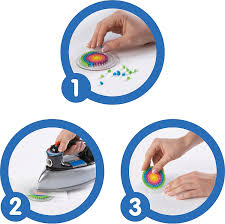
Follow this simple process for perfect, flat, fused beads.
- Prepare your iron
Set it to the medium or medium‑high heat setting. Let it warm up fully. Turn steam OFF. - Cover your beads
Place a sheet of ironing paper over the entire design. Make sure no beads are exposed. - Iron gently in circular motions
Move the iron slowly in small circles. Don't press down hard at first. Let the heat do the work. - Check the fusion
After 20–30 seconds, lift the paper slightly and check. Beads should start sticking together. - Iron until fully fused
Continue until the tops of the beads are smooth and connected. - Flip and iron the other side (optional but recommended)
For extra strength, flip the project carefully and iron the other side using the same method. - Cool and flatten
Place a heavy book on top while it cools for 5–10 minutes. This prevents warping.
That's it! Your project will be strong, flat, and professional.
How to Get a No‑Hole Perler Bead Finish
Many crafters want the smooth, seamless "no‑hole" look. Here's how to do it properly.
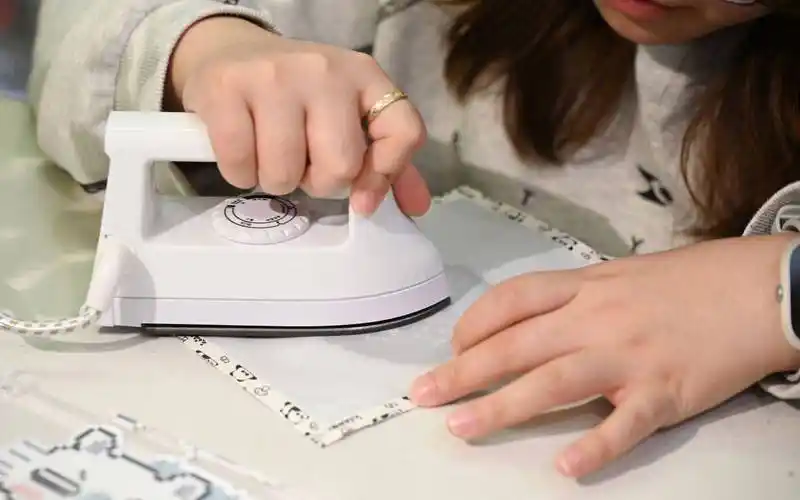
- Use medium‑high heat.
- Iron slightly longer, but don't overdo it.
- Keep the iron moving to avoid burning.
- Stop when the holes close evenly.
- Let it cool under a book to stay flat.
A no‑hole finish looks cleaner, more professional, and works great for coasters, jewelry, and wall art.
How to Prevent Warping in Perler Bead Projects
Warping is the most common frustration. Here's how to stop it completely.
- Always let beads cool under a heavy book.
- Don't use steam.
- Don't use extremely high heat.
- Don't leave the iron in one spot too long.
- Iron both sides for stability.
- Use a flat, heat‑safe surface.
Following these rules will keep your projects perfectly flat.
Ironing Differences: Small vs. Large Projects
Small and large Perler bead designs need different ironing styles.
Small projects (keychains, charms)
- Shorter ironing time: 15–25 seconds per side
- Lighter pressure
- Cool quickly under a book
Large projects (wall art, coasters)
- Longer ironing time: 30–60 seconds per side
- Keep iron moving to cover all areas
- Iron both sides for strength
- Use a heavier book to flatten
Common Ironing Mistakes & How to Fix Them
Even experienced crafters make mistakes. Here's how to fix the most common ones.
Mistake 1: Beads won't stick together
You didn't iron long enough. Put the paper back and iron a little longer.
Mistake 2: Visible holes still there
Iron a bit more to fuse the beads further.
Mistake 3: Warped, bent project
Reheat the area lightly, then press under a heavy book while cooling.
Mistake 4: Beads melted too much
Lower the heat or reduce time. Over‑melting distorts shapes.
Mistake 5: Paper sticks to beads
Your heat was too high or you used thin paper. Use proper parchment paper.
How to Iron 3D Perler Bead Projects
3D projects need extra care because they have multiple panels.
- Iron each panel separately.
- Don't over‑iron—panels must stay straight.
- Let each piece cool completely before assembling.
- Use glue or extra beads to connect parts.
Pro Tips for Professional Perler Bead Ironing
These tricks will make your projects look like they came from a craft store.
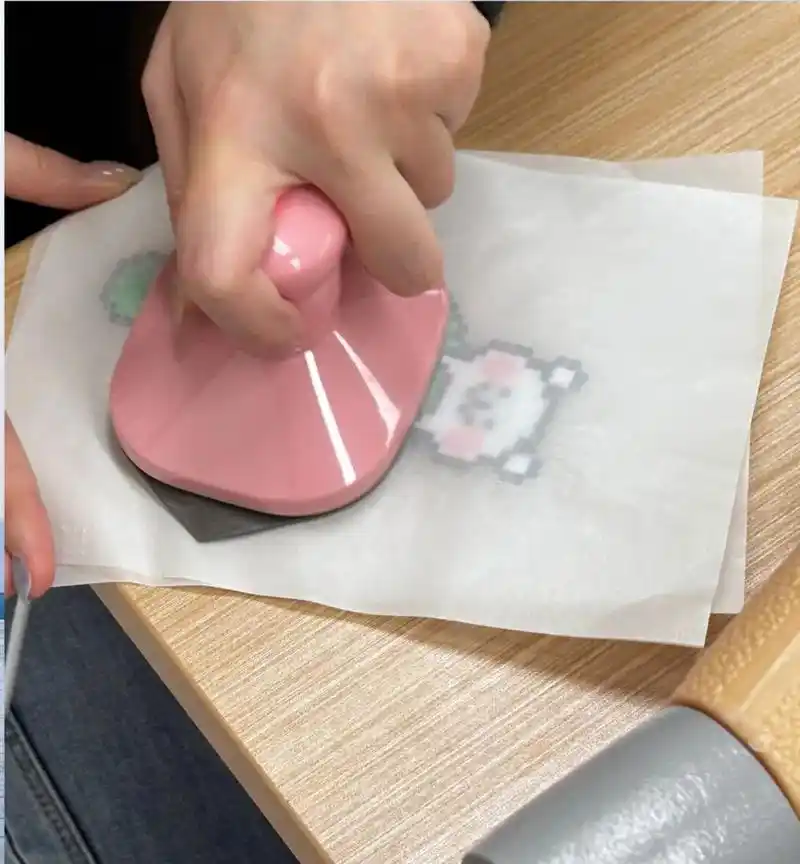
- Always iron in circular motions.
- Keep your iron moving—never hold it still.
- Let the iron fully heat up before starting.
- Use fresh ironing paper for each project.
- For shiny surfaces, iron slightly longer.
- For matte surfaces, iron just enough to fuse.
- Label your ironing paper so you don't mix it with kitchen paper.
Final Thoughts
Ironing isn't just a step—it's the skill that makes or breaks your Perler bead projects. With the right heat, timing, and technique, you can create flat, strong, no‑hole, warp‑free designs every single time.
Whether you're a beginner or experienced crafter, this guide gives you everything you need to iron like a pro. No more frustration, no more ruined projects, no more uneven melts.
Now you're ready to make clean, professional Perler bead crafts you can be proud of.