
The Perler Bead Tape Method: How to Make Large, Complex Designs Without Ruining Your Pegboards
You've spent three hours placing thousands of beads for a massive project. The design spans four connected pegboards. It's beautiful. It's perfect. Now you need to iron it without destroying everything.
If you've ever tried to iron a large Perler bead design directly on the pegboard, you know the risks. Pegboards warp from heat. Beads shift and fall. Edges curl. The whole project collapses before you even start melting.
There's a better way. It's called the tape method. In this guide, we'll show you exactly how to use this professional technique to create large, complex, multi-board Perler bead designs without warping your pegboards or losing your mind.
What Is the Tape Method?
The tape method is a technique where you transfer your completed bead design off the pegboard before ironing. You use strips of masking tape to "pick up" all the beads at once, flip the entire design, and then iron it from the back side.
Why would you do this? Because ironing directly on pegboards causes several problems:
- Pegboards warp and melt under high heat
- Beads can shift or fall during ironing
- You can only iron one side easily
- Large designs are nearly impossible to move once placed
- Pegboard pegs can show through the finished piece
The tape method solves all of these issues. Professional Perler artists use it for every project larger than a single pegboard.
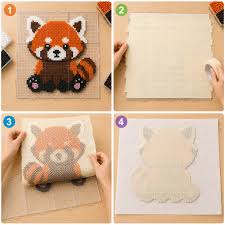
When Should You Use the Tape Method?
The tape method is essential for certain types of projects but optional for others. Here's when you should use it:
Always use the tape method for:
- Multi-board designs (2 or more pegboards connected)
- Large single-board designs (over 30x30 beads)
- Projects with delicate or detailed areas
- 3D Perler bead projects that need precise panels
- Any project you want to iron on both sides
You can skip the tape method for:
- Tiny projects (under 15x15 beads)
- Simple keychains or magnets
- Projects you're okay with ironing only one side
- Designs you don't mind potentially ruining a pegboard for
For most crafters, learning the tape method opens up possibilities for much larger and more impressive projects.
Supplies You'll Need for the Tape Method
Good news: you probably already have everything you need. The tape method requires only two additional supplies beyond your normal Perler bead setup.
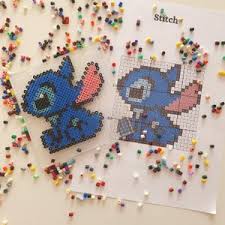
Essential supplies:
- Masking tape or painter's tape – 1 to 2 inches wide works best. Avoid packing tape or duct tape (too sticky and hard to remove).
- Scissors – for cutting tape strips.
- A flat, clean surface – for flipping and ironing.
- Ironing paper – same as usual.
- Your iron – dry iron, no steam.
- Optional: rolling pin – for pressing tape onto beads evenly.
That's it. No special tools required.
Step-by-Step: How to Use the Tape Method
Follow these steps carefully. The first time you try the tape method, go slowly. After a few tries, it will become second nature.
Step 1: Create Your Bead Design as Usual
Place all your beads on the pegboard(s) following your pattern. Take your time. Make sure every bead is correctly positioned. Double-check before moving to the next step because once you apply tape, adjustments are tricky.
Step 2: Cut Strips of Masking Tape
Cut enough tape strips to cover your entire design. Each strip should be slightly longer than the width of your design. For multi-board projects, cut strips that span across all connected boards.
Pro tip: Use painter's tape for very delicate designs. It has less adhesive and is easier to remove later.
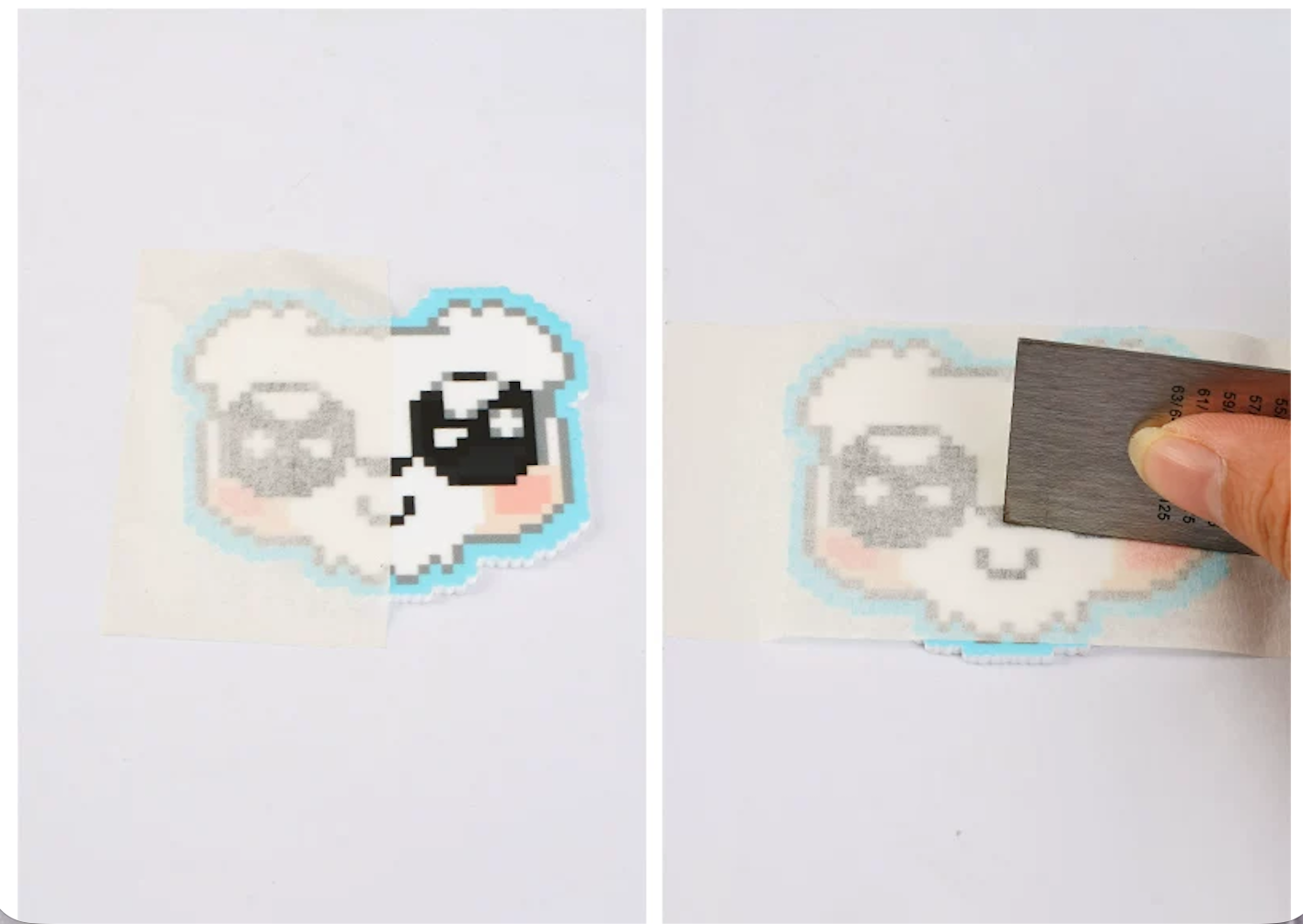
Step 3: Apply Tape Strips to Your Design
This step requires patience. Place tape strips carefully over your bead design. Press them down gently but firmly. Make sure each strip slightly overlaps the previous one. No gaps. No wrinkles.
Important: Don't press so hard that beads shift. The tape should stick to the top of each bead without pushing them out of place.
Step 4: Press Tape Firmly (The Rolling Pin Trick)
Once all tape is applied, run a rolling pin or the flat side of a ruler over the entire taped surface. This ensures every bead makes good contact with the tape. Pay extra attention to edges and corners where beads are most likely to fall off.
Step 5: Poke Air Holes (Crucial Step!)
This is the most overlooked but most important step. Use a needle, pin, or the tip of your tweezers to poke a small hole through the tape next to EVERY bead. Why? When you iron, trapped air expands and can create bubbles or blow holes in your melted design. Poking holes lets the air escape.
How many holes? At minimum, one hole per 5-10 beads. For best results, poke holes next to every bead. Yes, it takes time. No, you shouldn't skip it.
Step 6: Remove the Design from the Pegboard
Carefully lift the entire taped design off the pegboard. Start from one corner and peel slowly. The tape should hold all beads in place. If any beads fall off, press them back onto the tape and re-press the area.
Flip the design over so the tape side is facing down and the bead bottoms are facing up.
Step 7: Iron from the Back Side
Place the flipped design on a flat, heat-safe surface. Cover with ironing paper. Iron as usual using medium heat and circular motions. Because there's no pegboard underneath, you can apply even pressure across the entire design.
Iron until the beads are fused on the back side. The holes will still be visible on this side (that's fine).
Step 8: Remove the Tape
Let the piece cool slightly (1-2 minutes). Then carefully peel off the masking tape. Peel slowly at a 45-degree angle. The beads should now be fused well enough to stay together without the tape.
Step 9: Iron the Front Side
Now you have a loose but fused design. Cover with fresh ironing paper and iron the front side to your desired finish. This is your chance to create a smooth, no-hole surface or leave a textured look.
Step 10: Cool Under Weight
Place the finished project under a heavy book for 10-15 minutes. This prevents warping and ensures a flat final piece.
Common Tape Method Mistakes (And How to Avoid Them)
Even experienced crafters make mistakes with the tape method. Here's what to watch out for.
Mistake 1: Using tape that's too sticky
Duct tape, packing tape, and super-strong masking tape can leave residue on your beads or be impossible to remove. Stick to standard masking tape or painter's tape.
Mistake 2: Forgetting to poke air holes
Skipping this step causes bubbles, blowouts, and ruined projects. Take the time to poke holes. Your finished piece will look much cleaner.
Mistake 3: Not overlapping tape strips
Gaps between tape strips mean beads can fall out. Overlap each strip by at least 1/4 inch.
Mistake 4: Peeling tape too fast or at the wrong angle
Peel slowly at a 45-degree angle. Pulling straight up or ripping quickly can lift beads off the design.
Mistake 5: Ironing before removing from pegboard
The whole point of the tape method is to iron off the pegboard. If you iron while still on the board, you've defeated the purpose.
Advanced Tape Method Techniques
Once you master the basics, try these advanced techniques for even better results.
Double-taping for extra security:
For very large or fragile designs, apply a second layer of tape perpendicular to the first. This creates a grid of tape that holds beads more securely.
Partial taping for 3D projects:
When making 3D Perler bead panels, tape only the edges that will connect to other panels. Leave the center untaped so the panel remains flexible during assembly.
Wax paper backing:
After taping, press the taped design onto a sheet of wax paper. This adds another layer of stability when flipping large projects.
Why the Tape Method Is Worth Learning
The first time you try the tape method, it might feel awkward. You might lose a few beads. Your first attempt might not be perfect.
But here's why you should stick with it:
- Your pegboards will last forever. No more warped or melted boards.
- You can make much larger projects. Multi-board designs become easy instead of scary.
- Both sides iron perfectly. Your finished pieces are stronger and look more professional.
- You'll waste fewer beads. No more shifting or falling during ironing.
- You can fix mistakes. If a bead is wrong, you can still adjust it before ironing.
Once you learn the tape method, you'll never go back to ironing directly on pegboards.
Final Thoughts
The tape method is the single most important technique for serious Perler bead artists. It transforms what's possible with this craft. Small keychains are fun. But massive wall art, detailed portraits, and complex 3D structures? Those require the tape method.
Practice on a small project first. A 20x20 design is perfect for learning. Once you feel confident, scale up to multi-board projects. You'll be amazed at what you can create.
So grab your masking tape, poke those air holes, and start making projects you never thought possible with Perler beads.
Happy taping—and happy crafting!